When it comes to the coffee industry, quality really takes center stage these days. Nowadays, companies are on the lookout for reliable OEM coffee factories that stick to top-notch standards. I’ve put together this guide to highlight ten of the most well-known factories famous for their outstanding coffee production. Now, each of these places has its own strengths, but let’s be honest—challenges like maintaining consistency and managing supply chains can still pop up.
What’s really interesting is that many of these factories are big on innovation, especially with tech like, say, the Automated Coffee Machine. Perfecting coffee isn’t exactly a walk in the park—it’s a pretty complex process. These factories get that, and they know that satisfying all sorts of clients’ needs is key. But hey, even with all the fancy equipment, issues can still happen now and then.
Getting a good handle on the landscape of coffee manufacturing is really important if you want your business to succeed. Knowing which factories stand out can help you make smarter choices. The market’s always changing, so being flexible and adaptable is a must. At the end of the day, finding the right partner in the coffee world can really make all the difference, you know?
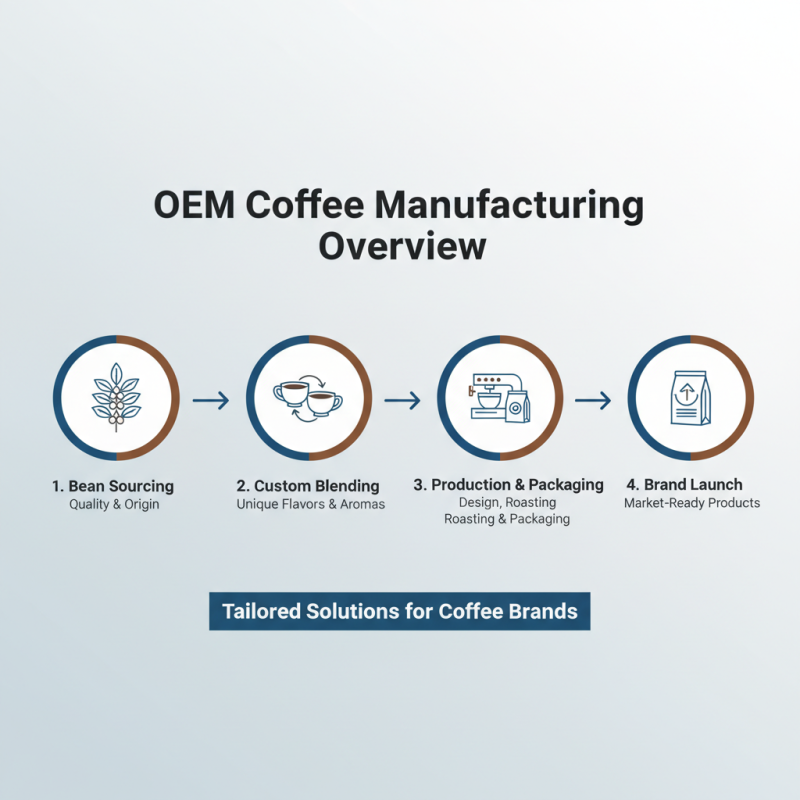
Overview of OEM Coffee Manufacturing
OEM coffee manufacturing is a complex yet fascinating field. It involves designing, producing, and packaging coffee products for various brands. Many manufacturers offer customized solutions, allowing brands to create unique blends. The process typically begins with sourcing quality beans. This step significantly influences the final product's taste and aroma.
Technology plays a crucial role in modern coffee manufacturing. For instance, automated systems like the Coffee Robot Barista enhance efficiency. These systems ensure consistency in brewing and reduce human error. However, reliance on automation can lead to challenges. Some consumers prefer the personal touch that human baristas provide. Balancing efficiency with quality remains a critical aspect of OEM coffee production.
Understanding market trends is vital for OEM manufacturers. They must adapt to changing preferences, such as eco-friendly practices and organic products. This adaptability can sometimes be difficult. An innovative idea may not always resonate with consumers. Manufacturers must be prepared to pivot their strategies. This continuous learning process is essential for long-term success in the coffee industry.
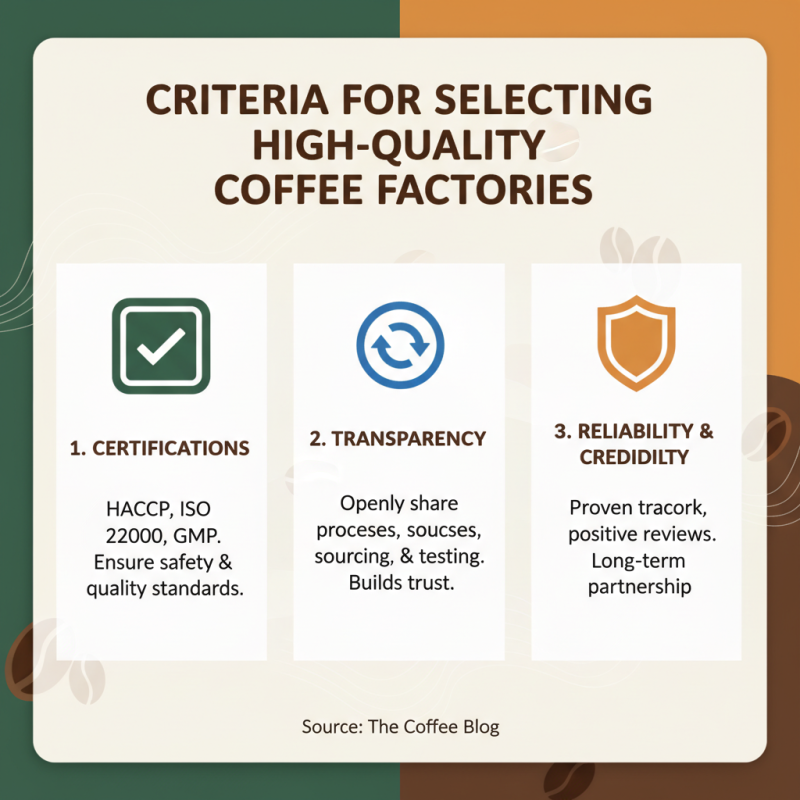
Criteria for Selecting High-Quality Coffee Factories
Selecting a high-quality OEM coffee factory requires careful consideration. First, evaluate the factory's certification. A reliable factory should have certifications like HACCP or ISO. These indicate rigorous adherence to safety and quality standards. Check for transparency in their processes as well. Factories that openly share information build trust and credibility.
Next, focus on the sourcing of coffee beans. Quality beans often come from specific regions known for their unique flavors. Assess where the factory sources their beans. Local relationships can lead to fresher, better-quality coffee. Visiting factories may provide insights into their practices. This hands-on approach can reveal inconsistencies.
Lastly, consider the factory's technology and equipment. Advanced roasting techniques lead to superior taste profiles. However, not all high-tech solutions equate to quality. Sometimes, traditional methods yield better results. Listen to feedback from industry experts and previous clients. Their experiences can guide your decision-making. Finding the right factory is a process that requires both research and reflection.
Top 10 OEM Coffee Factories: A Detailed Analysis
The world of coffee manufacturing is vast and varied. Numerous OEM coffee factories specialize in producing high-quality beans and blends. These factories often use advanced techniques to ensure flavor consistency and freshness. Many rely on cutting-edge technologies like the Ai Coffee Robot to optimize production processes. This integration allows for precision in roasting and blending, enhancing the final product's quality.
When searching for the right cooperative partner, transparency is crucial. It’s essential to review the factory's sourcing practices and manufacturing standards. Some factories may present well but lack the necessary certifications. Checking customer reviews and asking for samples can reveal more about their operations. Some companies might focus heavily on automation but overlook critical aspects like artisan methods that add unique flavor profiles.
Additionally, many factories face challenges with scalability. They may excel in small batches but struggle with large orders. This inconsistency can impact their reliability as a supplier. It’s essential to gauge their capabilities not only in production but also in maintaining quality over time. By evaluating these factors, you can make informative decisions about which OEM coffee factories to work with.
Factory A: Expertise, Capacity, and Specialty Products
Factory A stands out in the OEM coffee market due to its extensive expertise in coffee production. Their team comprises skilled professionals with years of experience. This knowledge translates into superior quality control measures. Customers appreciate the precise roasting techniques crafted to enhance flavor profiles. They also stay abreast of industry trends, ensuring their offerings remain competitive.
Additionally, Factory A boasts impressive production capacity. With state-of-the-art machinery, they can handle large orders efficiently. Yet, their commitment to quality doesn’t falter. They produce specialty coffee that appeals to discerning consumers. Not every factory manages to balance volume and quality, setting Factory A apart from competitors.
However, challenges exist, like sourcing sustainable beans consistently. This is an ongoing area for growth and improvement, reflecting their willingness to adapt in a changing market.
Factory B: Sustainable Practices and Quality Assurance
Sustainability has become a cornerstone in the coffee industry. Factory B emphasizes eco-friendly practices and quality assurance. By utilizing energy-efficient machines and renewable sources, they significantly reduce their carbon footprint. Reports suggest that companies adopting sustainable practices experience a 20% rise in customer loyalty.
Quality assurance is equally critical. Factory B implements stringent testing processes at each production stage, ensuring consistency. According to industry studies, 85% of consumers prefer brands that prioritize quality. The use of advanced technology, such as the AI Robot Coffee Car Machine, enhances precision and efficiency in production.
**Tips:**
- Look for factories that provide transparency in their sourcing methods.
- Consider the certifications that demonstrate a commitment to sustainability.
- Research customer feedback to gauge the reliability of a factory’s products.
The journey to sustainability is ongoing. While Factory B excels in many areas, challenges remain. Balancing cost and quality while maintaining eco-friendly practices requires constant evaluation. Finding solutions to these challenges is essential for future growth in the coffee sector.
Top 10 High Quality OEM Coffee Factories You Should Know?
| Factory Location | Sustainable Practices | Quality Assurance Certifications | Monthly Production Capacity (Tons) | Specialties |
| Brazil | Organic farming, water conservation | ISO 9001, Rainforest Alliance | 2000 | Arabica, specialty blends |
| Colombia | Ethical sourcing, fair trade practices | Fair Trade, UTZ Certified | 1500 | Single origin, gourmet |
| Ethiopia | Biodiversity preservation, community support | ISO 14001, Organic | 1000 | Yirgacheffe, Sidamo |
| Vietnam | Agroforestry, reduced pesticide use | HACCP, ISO 22000 | 3000 | Robusta, instant coffee |
| Costa Rica | Water management, shade-grown | Rainforest Alliance, Organic | 1200 | Tarrazú, honey process |
| Peru | Social responsible sourcing, agroecology | Fair Trade, USDA Organic | 800 | Blend, single varietal |
| Honduras | Community development, eco-friendly processing | ISO 9001, Fair Trade | 950 | Flavored, washed |
| Mexico | Sustainable farming, reducing carbon footprint | Organic, Rainforest Alliance | 600 | Single origin, dark roast |
| India | Agroforestry, water-efficient practices | Fair Trade, ISO 14001 | 700 | Monsooned Malabar, specialty |
Comparative Insights: Price, Quality, and Customer Satisfaction
When evaluating coffee factories, price and quality are critical factors. Numerous reports indicate that consumers are increasingly prioritizing these elements. For instance, a recent industry survey revealed that 75% of coffee buyers strongly consider product quality over price, suggesting a shift in market dynamics. This trend implies that premium quality often garners higher customer satisfaction.
In the quest for premium products, emerging technologies play a significant role. Innovations like the AI Coffee Car Machine enhance production efficiency, ensuring consistency and quality. However, not all manufacturers leverage these technologies effectively. Some factories struggle with outdated equipment, impacting their final product's quality. This inconsistency can frustrate customers who expect a reliable experience.
Additionally, customer satisfaction is not just about product quality. It heavily relies on service and communication. Data shows that factories with high customer engagement rates tend to perform better on satisfaction scales. Yet, many remain unaware of the essential connection between service quality and repeat business. For instance, factories that fail to address customer feedback may find their hard-earned reputation tarnished.
Emerging Trends in OEM Coffee Production and Distribution
Emerging trends in OEM coffee production and distribution highlight the evolution of consumer preferences. Nowadays, coffee drinkers seek sustainable sourcing and unique flavors. Producers are responding by diversifying their offerings, focusing on specialty blends and eco-friendly practices. This shift requires factories to innovate continuously, exploring new roasting techniques and origins.
Another trend is the rise of personalized products. Consumers enjoy customizing their coffee experiences. This has led to increased demand for bespoke blends crafted to individual tastes. OEM factories are adapting quickly. Technology enables them to track preferences and adjust production accordingly, creating more efficient supply chains. However, this also presents challenges in maintaining quality and consistency.
The importance of transparency is growing. Buyers want to know where their coffee comes from and how it is produced. This necessitates clear labeling and ethical business practices. Yet, not all factories have the resources to meet these demands. Many face difficulties in balancing transparency with cost. The industry must navigate these complexities to build lasting trust with consumers.
Revolutionizing Coffee Culture: The Future of Automated Brewing with AI-Powered Mobile Vending Solutions
As coffee culture continues to evolve, the introduction of AI-powered mobile vending solutions is set to revolutionize the landscape of automated brewing. The Mobile 24H Master Cafe, designed to replicate the exquisite craftsmanship of coffee baristas, is a prime example of this innovation. Leveraging advanced technology, it offers consumers high-quality coffee on-the-go while maintaining the artistry typically associated with artisan coffee shops.
Recent industry reports highlight a growing demand for convenient yet premium coffee experiences, with the global coffee vending machine market projected to reach $2.5 billion by 2025. This surge is driven by the increasing need for automation in food and beverage services, coupled with consumers' desire for high-quality, customizable drinks. The Mobile 24H Master Cafe stands out by achieving three prestigious professional quality certifications from the EU, US, and China, solidifying its reliability and safety in diverse markets.
Moreover, with over 70 national patents and recognition as a national high-tech enterprise, the innovation behind this mobile cafe exemplifies how technology can enhance traditional experiences. Exporting to more than 60 countries, the product is well-positioned to meet the global demand for Automated Coffee Solutions, combining the essence of barista expertise with the convenience of mobile vending. This shift not only caters to a busy lifestyle but also ensures that the quality of coffee remains uncompromised, paving the way for the future of coffee culture.
FAQS
: Look for transparency in sourcing practices and manufacturing standards. Check for certifications and customer reviews.
Request samples to evaluate quality. Assess their production methods and consistency when handling large orders.
Trends include a focus on sustainability, unique flavors, and personalized products catering to consumer preferences.
Many use advanced techniques and technologies to improve roasting and blending processes, ensuring quality output.
Factories often struggle with scalability, impacting their ability to handle large orders while maintaining quality.
Consumers increasingly want to know the origins and production methods of their coffee, prompting factories to be more open.
Yes, many OEM factories now offer personalized blends tailored to individual tastes, thanks to improved tracking technology.
Not all factories are equipped to adapt. Some may struggle to balance innovation with traditional methods and costs.
Artisan methods can enhance flavor profiles, but some factories may focus too heavily on automation and miss these aspects.
Some factories may appear compliant but lack the essential certifications, which raises questions about their actual practices.
Conclusion
This article provides a comprehensive overview of the OEM coffee manufacturing landscape, highlighting the key criteria for selecting high-quality coffee factories. It emphasizes the importance of factors such as expertise, production capacity, and sustainable practices in ensuring superior coffee quality.
Additionally, the article details a comparative analysis of the top 10 OEM coffee factories, examining their specialty products, pricing, and customer satisfaction levels. As the coffee industry evolves, it also addresses emerging trends in production and distribution, underscoring the growing importance of sustainability and quality assurance in meeting consumer demand. This detailed exploration serves as a valuable guide for those seeking reliable partners in the coffee manufacturing sector.